
American Lighting luxury chandelier
A chandelier is a attractive ceiling-mounted light fixture. Chandeliers are ornate often, and use lamps normally. Crystal chandeliers have more or less complicated arrays of crystal prisms to illuminate a available room with refracted light. Chandeliers are located in hallways often, living rooms, and in bathrooms recently.
The term chandelier was first known in the British vocabulary in the 1736, borrowed from the Old French phrase chandelier, which comes from the Latin candelabrum.
The earliest candlestick chandeliers were utilized by the prosperous in medieval times, this type of chandelier could be moved to different rooms. From 15th century, more complex varieties of chandeliers, predicated on diamond ring or crown designs, became popular attractive features in palaces and homes of nobility, merchants and clergy. It is high cost made the chandelier a symbol of position and luxury.
By the early 18th hundred years, ornate solid ormolu forms with long, curved arms and many candles were in the homes of several in the growing product owner class. Neoclassical motifs became an increasingly common element, largely in solid metals but also in carved and gilded wood. Chandeliers manufactured in this style drew heavily on the aesthetic of ancient Greece and Rome also, incorporating clean lines, classical proportions and mythological creatures. Developments in glassmaking later allowed cheaper creation of business lead crystal, the light scattering properties which quickly made it a favorite addition to the form, resulting in the crystal chandelier.
During the 18th century a glass chandeliers were produced by Bohemiens and Venetian glassmakers who had been both masters in the art of making chandeliers. Bohemian style was largely successful across Europe and its own biggest pull was the chance to obtain spectacular light refraction anticipated to facets and bevels of crystal prisms. As a reaction to this new taste Italian cup factories in Murano created new kinds of artistic light sources. Since Murano cup was not suitable for faceting, typical work became aware at the right amount of time in other countries where crystal was used, venetian glassmakers relied after the unique features of their a glass. Typical features of a Murano chandelier will be the elaborate arabeques of leaves, blossoms and fruits that might be enriched by coloured wine glass, permitted by the specific type of glass found in Murano. This goblet they worked with was so unique, as it was soda glass (famed for its extraordinary lightness) and was a complete compare to all different types of glass produced in the world in those days. An incredible amount of skill and time was required to twist and shape a chandelier precisely. This new kind of chandelier was called "ciocca" literally bouquet of flowers, for the characteristic decorations of glazed polychrome flowers. The best sumptuous of them consisted of a metal structure protected with small elements in blown goblet, transparent or colored, with decor of flowers, fruits and leaves, while simpler model acquired arms made out of a unique little bit of glass. Their shape was motivated by a genuine architectural concept: the area inside is left almost vacant since adornments are spread all around the central support, distanced from it by the length of the forearms. One of the common use of the huge Murano Chandeliers was the interior lamps of theatres and rooms in important palaces.
In the mid-19th century, as gas lighting trapped on, branched roof fittings called gasoliers (a portmanteau of gas and chandelier) were produced, and many candle chandeliers were turned. By 1890s, with the looks of electric light, some chandeliers used both electricity and gas. As distribution of electricity widened, and supplies became dependable, electric-only chandeliers became standard. Another portmanteau phrase, electrolier, was produced for these, but nowadays these are mostly called chandeliers. Some are fitted with bulbs shaped to imitate candle flames, for example those shown below in Chatsworth and Epsom, or with bulbs containing a shimmering gas discharge.
The world's most significant English Wine glass chandelier,(Hancock Rixon & Dunt and probably F. & C. Osler) is positioned in the Dolmabah?e Palace in Istanbul. It offers 750 weighs and bulbs 4.5 tons. Dolmabah?e has the major collection of British and Baccarat crystal chandeliers in the global world, and one of the great staircases has balusters of Baccarat crystal.
More complex and elaborate chandeliers continued to be developed throughout the 18th and 19th generations, but the popular benefits of gas and electricity got devalued the chandelier's appeal as a position symbol.
Toward the finish of the 20th century, chandeliers were often used as ornamental things for rooms, and often didn't light up.
Copper Chandelier LightingBuy Cheap Copper Chandelier Lighting
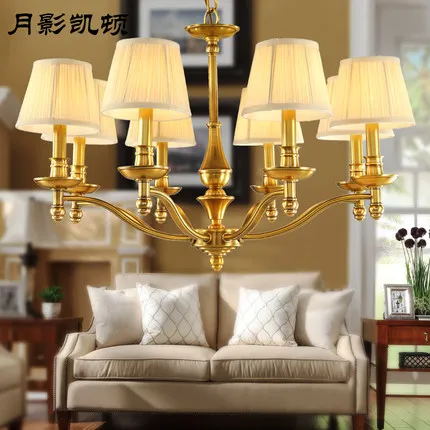 https://ae01.alicdn.com/kf/HTB1kOtULXXXXXbuaXXXq6xXFXXXX/-DBF-American-style-3-8-Arms-Luxury-Brass-Candle-Full-font-b-Copper-b-font.jpg
Iron Chandelier light american wrought iron crystal lamps luxury
 http://g02.a.alicdn.com/kf/HTB1yr4aKFXXXXcCXFXXq6xXFXXXQ/Antique-Bronze-Iron-Chandelier-light-american-wrought-iron-crystal-lamps-luxury-lamp-Black-Antique-Bronze-Iron.jpg
Light American Style nordic fixtures lightingin Pendant Lights from
 http://g01.a.alicdn.com/kf/HTB1c5lqMFXXXXXKXXXXq6xXFXXX4/Luxury-Retro-rope-Industrial-pendant-Lights-edison-Vintage-Restaurant-Living-bar-Light-American-Style-nordic-fixtures.jpg
american classic design brass large chandelier item ws23456 for top
 http://www.ichandeliermall.com/wp-content/uploads/2014/01/american-classic-style-brass-large-chandelier-luxury-taste-for-top-commercial-and-home-big-space-33-lights.jpg
OIP.M37eaf22d0fe32105631dc640baae8b13o0
2AB21B4F8DB64B563C90AF4B2F69DD3A063FB7AC0http://www.aliexpress.com/popular/furniture-fixtures.html
Embed Our image to your website
ThumbnailImageEmbed Our image to a Forum
ThumbnailImage


